
At DLB Investigations, we’ve seen the same pattern play out across the claims landscape for years. Despite advances in claims systems and technology, insurers continue to face excessive claims leakage, avoidable indemnity spend and undetected fraud – especially in the early stages of a claim.
The reality is this: many high-cost, complex or fraudulent claims display clear warning signs early in their lifecycle. Yet all too often, those signals are overlooked due to rigid, automated processes that tend to prioritise speed over substance or due to an over-reliance on technology that removes the human expertise needed to identify the intangibles.
We believe that to properly control leakage, manage fraud risk and protect claim outcomes, the early stage of a claim requires a different approach – one that blends fast, AI-assisted analysis with experienced, human investigation.
Understanding the Claims Food Chain
The claims food chain is tangible. We’ve seen how so many claims that ultimately become costly or problematic could be identified and managed differently if the opportunity for proper insight was taken early. Unfortunately, system-driven processes often miss the subtle cues, the inconsistencies and risk factors that experienced investigators routinely identify.
The failure to capture these insights at the start allows claims to progress unchecked, exposing insurers to unnecessary costs, increased indemnity spend and reputational damage.
Why Human Expertise Still Matters
Technology has its place in streamlining claims handling. We’re renowned for our use of tech to expedite procedures here at DLB. But we also know that it cannot replicate the critical thinking, professional questioning and contextual understanding that human investigators deliver.
Our field investigators are experienced. They’re trained to spot behavioural cues, discrepancies in statements, and other risk indicators that automated systems simply can’t detect. This human interaction is what enables a deeper, more reliable understanding of liability, indemnity and fraud risk – providing insurers with the intelligence required to make early, defensible decisions.
The RTC Approach in Real Time
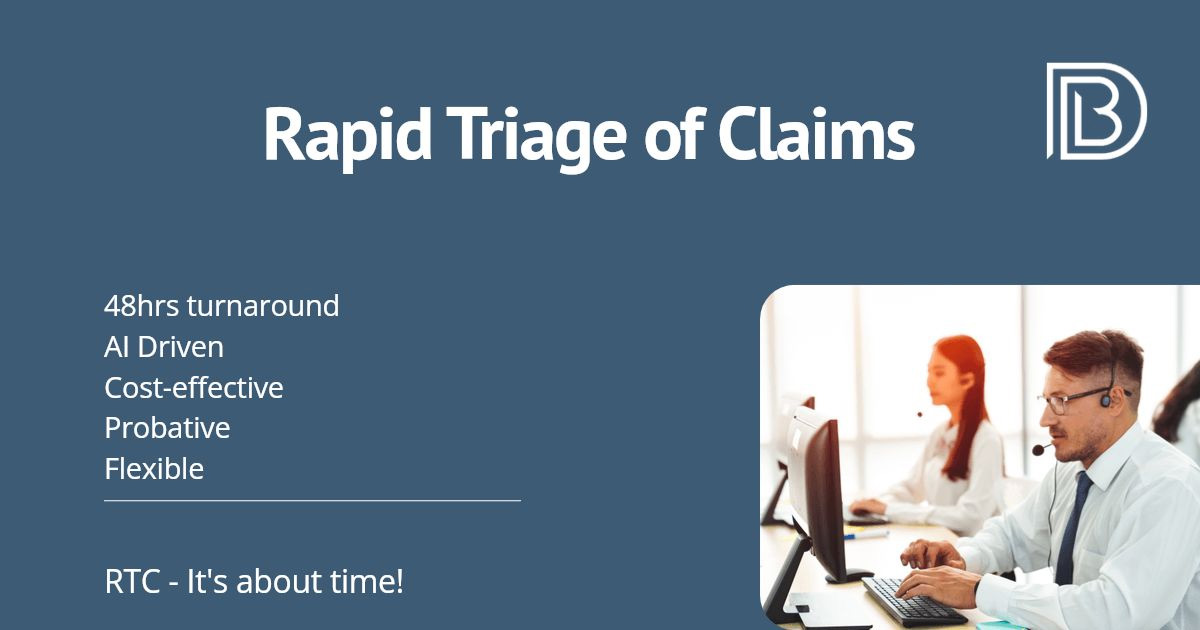
Our Rapid Triage of Claims (RTC) service combines AI-assisted triage with our experienced field investigators to deliver fast, evidence-led insight within 48 hours. A key part of our process is the use of secure, recorded video interviews.
While these real-time interviews capture verbal responses, they also acquire non-verbal behavioural indicators, which provide clear, reliable evidence. Crucially, they also eliminate the possibility of an interviewee later denying their statement, significantly reducing the risk of disputes, including appeals to the Financial Ombudsman Service (FOS).
Recorded interviews offer insurers a defensible audit trail – supporting claim decisions with high-quality evidence that stands up to external scrutiny.
The Key Benefits of RTC
- 48-hour turnaround delivering rapid, actionable insight
- AI-supported triage highlighting inconsistencies, risk factors and fraud indicators
- Recorded video interviews providing reliable, defensible evidence
- Field investigation expertise enhancing the probative value of findings
- Cost-efficient resource deployment focused on higher-risk claims
- Evidence-based, policy-aligned reporting supporting fair, defensible outcomes
- Reduced claims leakage, improved indemnity control and enhanced customer satisfaction
Insurers should rethink early-stage claims because the opportunity to intervene early is the most valuable chance insurers have to control costs, manage risk and improve outcomes. When early-stage claims are handled through rigid, system-heavy processes, that opportunity is lost. RTC gives insurers a different option by blending technology with human expertise to reduce financial and reputational risks associated with poorly managed claims.
It’s Time to Investigate a Different Way
Insurers need solutions that deliver speed, insight, and defensible outcomes – without compromising investigative quality. That’s exactly what RTC provides: a fast, reliable and evidence-led triage service designed to protect insurers from leakage, fraud and unnecessary indemnity spend.
Rapid Triage of Claims – because identifying risk early isn’t just faster, it’s essential.
Check out the details of RTC supported by our trained IRIS AI here.
