
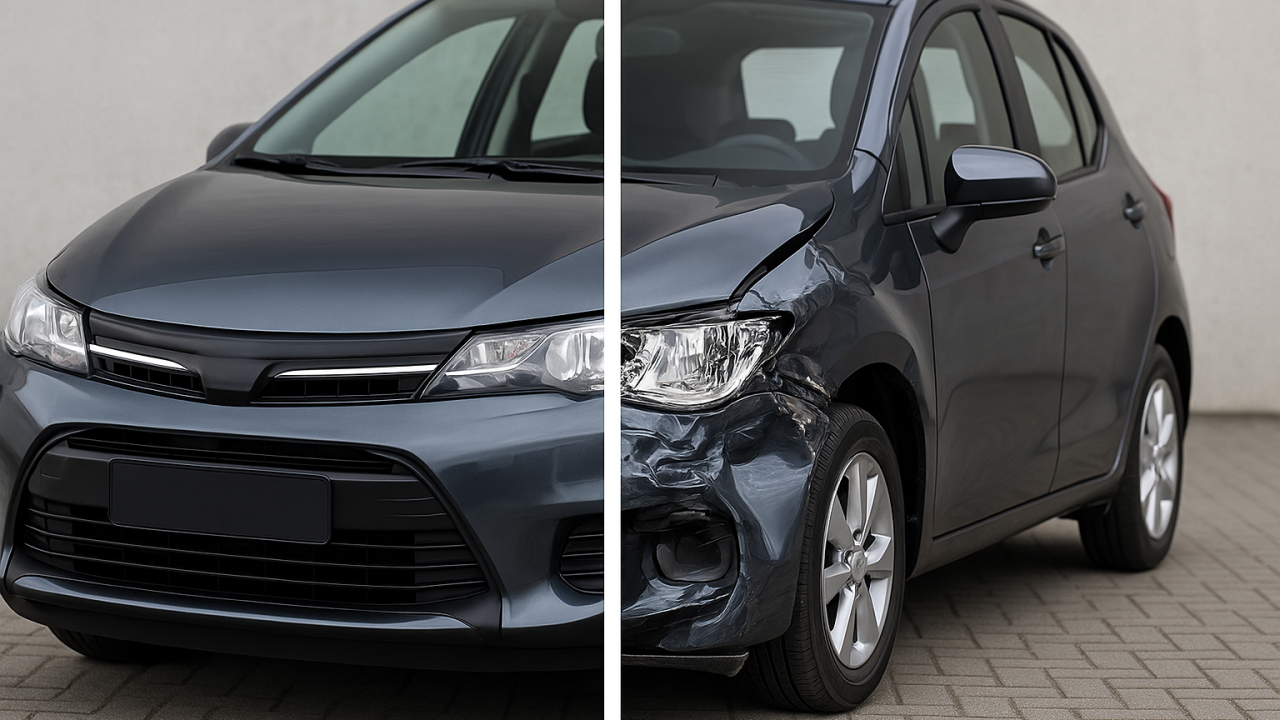
Similar to the picture above, a claim was received recently, with the image of the insured vehicle looking convincing enough.
A van with a badly damaged bumper, submitted alongside a claim describing a low-speed collision. Nothing unusual there, on the face of it. But something didn’t sit right. A quick check online, and there it was: the same van, the same background, the same timestamp, only this time the bumper was perfectly intact. The claimant hadn’t suffered a loss at all. They’d simply Photoshopped one into existence.
The “accident” was digital. The intent was real.
The New Face of Insurance Fraud
Insurance fraud has always evolved with the tools of its time. Once, it was forged signatures, falsified receipts and staged slips on wet floors. Today it’s pixels and filters.
We’re now facing a new wave of image-based deception, from crude Photoshop edits to convincing AI-generated deepfakes. What we call shallowfakes: lightly edited or cropped images designed to pass as evidence. The rest are deepfakes: generated by artificial intelligence to create events, people or damage that never actually existed. Both are now finding their way into insurance claims. And that changes everything.
From Snapshots to Synthetic Evidence
Modern fraud no longer always involves staged crashes or fake injury reports. Sometimes, it starts and ends with a smartphone.
A claimant enhances a dent; a contractor inflates property damage in a photo; someone copies an image from Google, crops out the watermark, and uploads it as their own. It sounds amateurish, doesn’t it? That is, until you realise how easily it can slip past initial claims reviews. The photos look real. The metadata seems recent. The story fits. But what gives it away is almost always the digital footprint – the hidden timestamps, GPS data and device information embedded in every image file.
One UK insurer recently reported detecting hundreds of digitally altered claim photos each month. Some of them are sloppy, others impressively professional. Either way, the truth is always in the metadata, and that’s where you should be looking.
The Fine Line Between Mistake and Manipulation
Not every image anomaly is fraud. Some claimants genuinely crop or compress photos for upload. But intent is everything. When edits are deliberate, designed to mislead, that’s where deception begins, and where investigators can earn their keep.
Even more concerning is the rise of micro-fraud networks. Online groups now sell “before and after” images of fake damage for a small fee, offering pre-edited “evidence” for claims. What used to be opportunism is now a small but growing industry. It’s quick, digital, and hard to trace.
Fighting Fakes with Forensics
Fortunately, the industry is adapting. Digital forensic tools can now perform error-level analysis to highlight tampered areas invisible to the human eye. Reverse image searches can expose stock photos or reused evidence. Forensic software can identify whether an image was modified in Photoshop, Canva, or even a basic phone app. But technology isn’t the only weapon. The human eye, often backed by instinct, curiosity and experience, remains the most effective tool of all.
An experienced Investigator knows when a story doesn’t quite add up. They spot what machines can’t yet interpret: tone, behaviour and plausibility. That mix of human judgment and digital verification is what continues to catch fraudsters out.
The Lesson Behind the Lens
The Photoshopped bumper story is amusing, but it also illustrates something deeper. Fraud has always been about storytelling, about creating a version of events that someone else will believe. The tools may have changed, but the motive hasn’t.
The modern fraudster no longer needs to stage an accident; they just need an app. But every pixel still leaves a trail, and every false story leaves a pattern. Technology may help fabricate reality, but it also helps us prove what’s real.
Fraud is getting smarter. So are investigators.
And in a world where images can lie, the truth still leaves evidence – and if you know where to look, it’s often staring you in the face.
